Friday, January 6, 2017

Working in the Digital Age

Wireless transmitters:
 
A wireless camera has a built in transmitter that can send videos over the air to a receiver and not through a wire. In an article I found while researching about wireless transmitters, “Wireless video cameras: Just the facts” gives details about what wireless transmitters are and how they are used. In this article, the author states, “Many people aren't aware that there are multiple types of wireless technology in use, each with unique advantages and disadvantages.” Some different types of wireless are 2.4 GHz which is most commercially available in electronic devices. 5.8 GHz which the cameras function are similar to 2.4 GHz. There is also WiFi, which allows multiple devices to be networked together and access a local area network through a wireless router. Another wireless is cellular, and connects to a cellular network to send videos. It is very similar to WiFi cameras.

As John Nordell tells how wireless transmitters work for photojournalist, he says, “You could be at a hockey game, and sitting right next to you is a little portable WiFi hotspot with your cell phone plugged into it, and so you take a picture, and the transmitter would take the digital image, send it to the cell phone which was connected to the WiFi hotspot and it would send the image back to the newspaper.” This makes it much easier and faster for photojournalist to get their images to their editor or published on time. This also helps at events that have high security. Photographers do not need to use runner anyone, they can just use wireless transmitters. Nordell expresses, “This is just tremendous”. Wireless transmitters changed the game for photojournalist.

Photo Source: http://www.4glterouteur.eu/novatel-mifi-3352-3g-hspa-mobilni-hotspot-wifi.html
This image is showing a personal Wifi Hotspot

 Also, with having a wireless transmitter of your own as a photojournalist, you are able to use it wherever. As Nordell says, if there is an event where everyone is trying to use their cell phones, it is hard to get service to send images. With the WiFi hotspot you can use your own service and be the only one hooked on to it.

Wireless transmitters are very different from pre-digital technologies such as Black and White roll film. The process to develop Black and white roll film takes a good amount of time, unlike using any of these wireless transmitter methods. However, I feel like with the Black and White roll film, you are able to take time and study your images before sending them to your editor or newspaper.


Photo by unknown
Image Source: https://volkshochschule-landau.de/Bild/cmx547c48849bfda.html
This image is showing how easy it is to use and digital camera, see what you are taking a photo of, seeing the photo and then being able to develop it or send it wirelessly. It shows how it is easier than waiting for photos being developed before digital cameras.

Thursday, January 5, 2017

The Art of Photojournalism

Photo by Steve McCurry
Image Source: http://www.listedtips.com/10-composition-tips-with-award-winning-photographer-steve-McCurry
Year Created: 2012

Rule of Thirds:

Steve McCurry has one ballerina, that is waiting to get on stage with the other, standing in a dark spot. While you see the other ballerinas on stage and has light on them. The ballerina that is standing backstage waiting, you see the glow of the stage lights on her face and the front of her body. It seems as though this one ballerina may be younger than the others on stage and is watching as she cannot wait to be as good as them. Or maybe she has a solo and is waiting till it is her time to go on.

Why I Choose This Image:

 I choose this image because it could have different meanings to it. I also choose this image because it shows the light on a dark spot. It shows behind the sense we do not see of a play.

Photo by Richard Avedon
Image Source: https://pleasurephotoroom.wordpress.com/2012/12/16/jean-shrimpton-photo-richard-avedon-harpers-bazaar-1964/
Year Created: 1964

Black and White:

Richard Avedon takes a photograph of Jean Shrimpton in Black and White. This photo defines Jean's jaw line and bring attention right to her face. The light contacts on her cheeks showing off her lips and nose. Her eyelashes are shadowed a bit and it makes her eyes brighter, also her eyebrows. On one side you can see the outline to her hair and the other side is too dark and shadowed to make out where her hair ends.

Why I Choose This Image:

I choose this image because I think Jean Shrimpton has a beautiful face. Looking at this Black and White image  you are drawn to her face. Jean was a model and actress, and in this photo she could be selling a type of make-up, to me it looks like an advertisement image. I also like the 1960's which was the generation this year was from. Women were just naturally beautiful then and did not use much make-up like todays women.
Photo by unknown
Image Source: http://www.vintag.es/2016/01/victorian-wedding-fashion-27-stunning.html
Year Created: 1885

Black and White

This photo was taken in the late 1800's, where there was no colored images yet. This photographer has the bride standing so you can see her dress, yet you do not see all of the bottom half. The woman's arms are placed behind her so you can see the detail of her dress. The woman's face it turned a little which makes one side of her face shaded and the other has a light on it. Also, the background is a sheet or curtain, you do not see anything around her other than the detail of the back drop.

Why I Choose This Image

I choose this image because I love black and white photographs. This picture is so old and has so much unknown to it. You only know that a women is getting married. This image shows detail of the dress and shows how much wedding dresses have changed since then and clothes in general. I also like that you do not have anything behind her, it keeps more of the unknown. I love old photos and seeing what is was like back in different time periods.

Wednesday, January 4, 2017

Pre-Digital Photographic Technology

Photo by Kelly Reilly


Black and white roll film affects photojournalist by its history. Black and white roll film is history. In the begging of photography, black and white roll film was the only choice for photographers. In the article "How Photographic Film Works", written by Charles Woodworth, writes there are five steps to developing film in black and white. Woodworth writes that the first step is, "the film is placed in developing agent that is actually a reducing agent. Given the chance, the reducing agent will convert all the silver ions into silver metal. Those grains that have latent-image sites will develop more rapidly. With the proper control of temperature, time and agitation, grains with latent images will become pure silver. The unexposed grains will remain as silver-halide crystals, The next step is to complete the developing process by rinsing the film with water, or by using a "stop" bath that arrests the development process The unexposed silver-halide crystals are removed in what is called the fixing bath. The fixer dissolves only silver-halide crystals, leaving the silver metal behind. In the final step, the film is washed with water to remove all the processing chemicals. The film strip is dried, and the individual exposures are cut into negatives.
Photography was around over twenty years before the Civil War, right before conflict broke out was when it started flowering. During the Civil War, photographs were in black and white. Eric Niiler wrote in the article, “How Civil War Photography Changed War”, that, “It [photos] allowed families to have a keepsake representation of their fathers or sons as they were away from home.” It gave family comfort to be able to have something of their son or father that shows them and they are able to see their face every day when they are gone. If they passed, then they had picture that will last forever for them to keep close to them. Photographer probably took more photos once the war started to families would be able to have those. This effected photojournalist to start, it helped for photographers to know what to take photos of and what people wanted to see.

Photojournalists have been around for all wars. In the article, “The Magnificent Eleven: The D-Day Photographs of Robert Capa, John Godfrey Morris states, He risked his life on more than one occasion during the Spanish Civil War and had taken what is considered the most eerily fascinating of all war photographs.” Photojournalists are putting their lives at risk to show people images of the war that people want to see. They want to see details of the war, they want images so it is like they are there also.
Photo by Robert Capa

Now of days, it is easy or anyone to take a photograph, even a child. Most people have a camera on them 24/7, right on there phone. It's as easy as holding your phone up to the object you are wanting to get photograph of and then pushing a button. The camera on the photo will do the focusing for you most of the time. You can even choose if you want it in black or white, negative, etc. You can add lighten or darken it, add fading, crop it, and so much more. You can upload it to many different social medias or you can print them out as easy as taking the photo. If you take it on an actual camera you may have a chip you use and can either do it in a computer at your own home or at a machine at a store that will print out your images right there. Same as if you use your phone, you can plug it in and upload your photos to your computer or the machine. It is so much faster easier now of days
for people, of any age, to use digital cameras. You see what you are taking a photo of. It is much easier then when photographs fist came out.

Tuesday, January 3, 2017

Can Photographs Change the World?


Photo by Andrew Fazekas
Image Source: http://voices.nationalgeographic.com/2014/01/10/aurora-sky-show-hit-and-miss/

This photograph has affected me personally by seeing such beauty in such a dark and cold place. Seeing images of the Northern Lights have made my number one thing on my bucket list is to go see them. I think they are so beautiful. The sky has always fascinated me, and seeing that it can make such beautiful colors is amazing to me. This picture inspires me to do well in life so I am able to go and experience the Northern Lights in person and not such see them in photographs. Also, to enjoy and appreciate the beauty in this world.            

I believe photographs can change the world. A photograph can show so much in one image. While looking at a photograph people can see so many emotions, feelings, and also see how other people live or other parts of the world they have not been too. A photograph can change the world by people seeing the hurt and the darkness in the world. Many people do not know what it is really like at war or in third world countries. By seeing photographs of these things can make an impact on how people see the world and may want to help with these issues. As Jonathan Klein said in his speech, “…since the beginning of photography, images have provoked reactions in people, and those reactions have caused change to happen.” Also, a photograph can show the beauty in the world. You do not know how beautiful any place can be until you see it, and many times that is from a photograph.

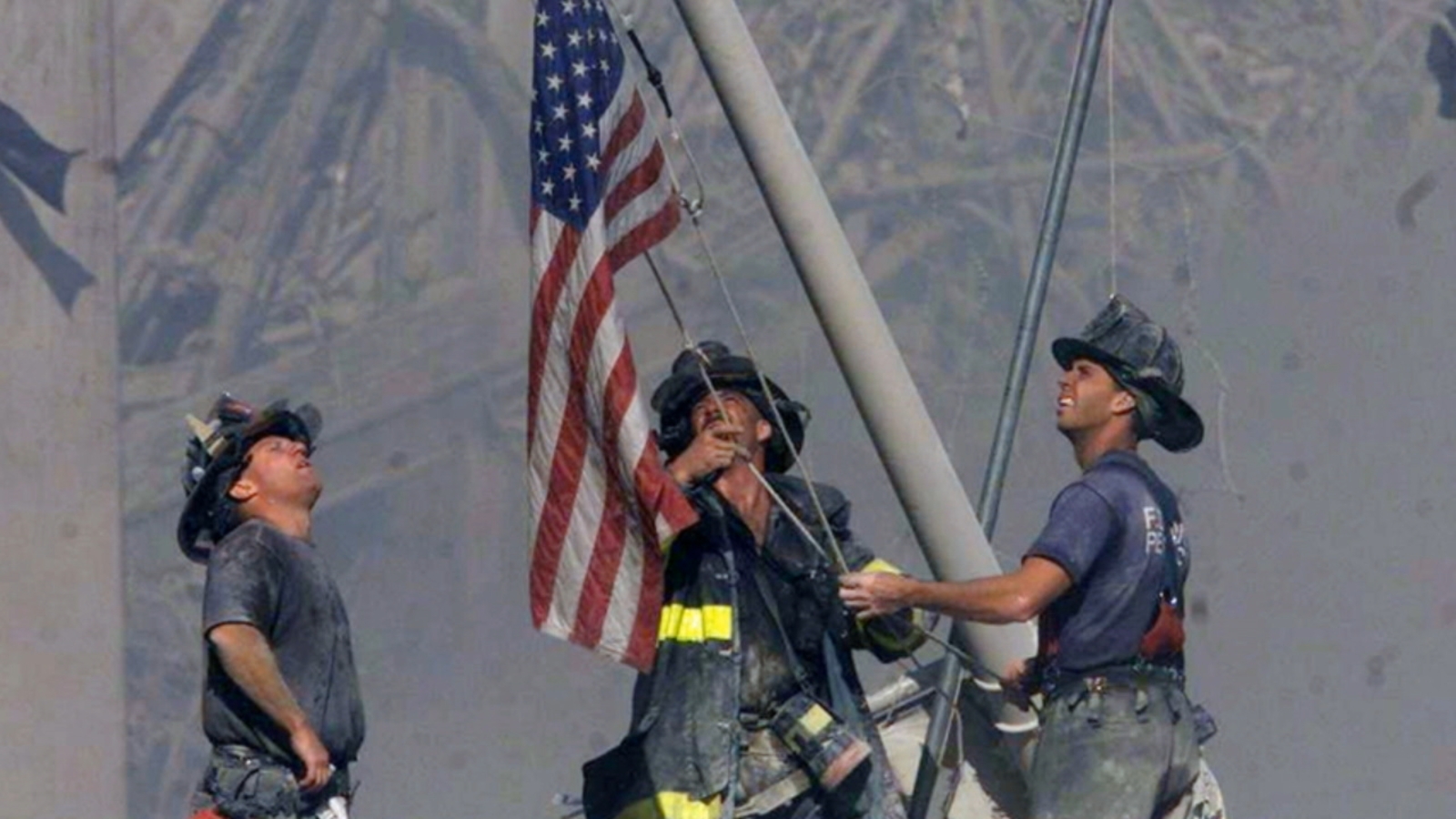
 Photographs can also change the world by capturing an image that can change history. John Nordell states in his video, “If a tree falls in the woods and there is no photojournalist to take a picture of it, did the event happen?” While things can happen that change the world, it is more believable through a photograph. An example is, if people did not have cameras or video cameras we would not have many or any pictures or videos of 9/11 terrorist attack. We were able to get pictures and videos of both plans flying into the Twin Towers, and them both collapsing. For months after and even years we see images of this day of the terror and pain on people’s faces. You felt their pain and you grieved for America and the ones who lost their lives or lost someone that tragic day.


Photo by Thomas E. Franklin
Image Source:http://newyork.cbslocal.com/photo-galleries/2016/09/08/911-memorial-museum-unveils-iconic-ground-zero-flag/

 I believe this picture changed the world. It shows the darkest day in America. It let the world know what happened and the pain the brought to so many. Yet it shows we are America, we are a strong country, and we will stand tall and work together to keep moving on. We will fight for those innocent people who lost their lives on that tragic day.

In the article “These 6 Corporations Control 90% Of The Media in America”, written by Ashley Lutz, shows an infographic by Jason at Frugal Dad. In Jason’s infographic, he writes, “In 1983, 90% of American media was owned by 50 companies. In 2011, that same 90% is controlled by 6 companies.” The six companies consist of: GE, News-Corp, Disney, Viacom, Time Warner, and CBS. Many photographs that are taken by photojournalist will not even be published. One reason may be government censorship. Another way that images might not be published is by the photojournalist’s editors. Ted Rall writes in the article “Censorship of war casualties in the US”, that “Media consumers saw thousands of images of dead and dying combatants, both American and Vietnamese, 40 years ago. Most were supplied by war photographers embedded with US troop units. But today's "embeds" are required to submit their work to military censors for approval and transmission.” I believe this is a smart and respectful thing to do to for the families who have lost someone. They do not want to see their loved ones in a newspaper, magazine, etc. lying there injured or dead. Having censorship is a good thing even if some photojournalist want you to see more.

Monday, January 2, 2017

Introducation to the History of Photojournalism


What is photojournalism? Photojournalism is a visual representation of a story. In an article I found online, they describe photojournalism by saying, “Photojournalism is the process of story telling using the medium of photography as your main story telling device. While a journalist will use their pen and paper to tell stories, a photojournalist will use their camera to capture the visual representation of a story.” I believe this is a great way of saying what photojournalist do.

As John Nordell stated in his video “It started with Mathew Brady’s photograph from the Civil War, to be considered by many to be the beginning of photojournalism.” It started with exhibits where people would stand in line to see the photographs. When technology increased people were able to bring pictures in newspapers. Today there are many other ways such as online newspapers, blogs, etc. Many photojournalist will photograph war sense.

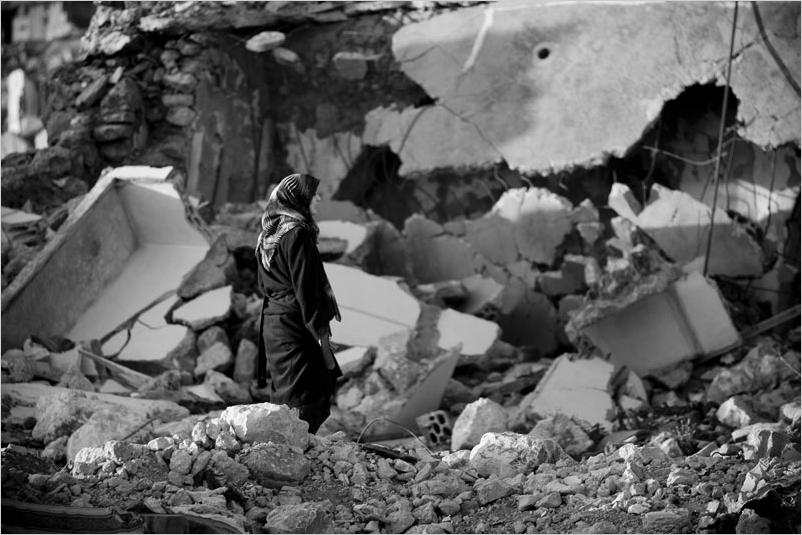
Zoriah said in the clip on the show “In Harms Way”, “It’s an old war photography saying that everybody wants to get an image that will stop war.” Since people cannot be there photojournalist take images to show people in different places what is going on. Photojournalism lets people see what is going on around the world, to be able to actual see the beauty in other places, or pain that others are going through.

Photo by Zoriah Miller
Image Source: http://www.taringa.net/posts/info/1455303/Zoriah-Miller.html
 

 In James Nachtwey clip, he says, “It’s occurred to me, that if everyone could be there just once, to see for themselves…what unspeakable pain of the impact of a single bullet… if everyone could be there to see for themselves the fear and grief just one time, they would understand that nothing is worth getting to that point where that happens to one person, let alone a thousand.” There photojournalist want people to see the pain of war, they want war to end, and for people to understand we should not be doing this to each other, we would not want to be in that pain so why put others in that pain.

Photo by James Nachtwey
Image Source: https://treacureps.wordpress.com/2013/06/30/james-natchwey-sebagai-fotografer-perang-dan-sosial/

 It is important to understand the history of photojournalism to understand the point to the images we see, and why people take their images, and some even put there life on the line to get that image to show us things we cannot see.

Sunday, January 1, 2017

Too young to wed

Stephanie Sinclair shows the issue of child marriage. Girls in other countries getting marriage at ages 9, 10, 11...
 
Photo by Stephanie Sinclair
Image Source: http://proof.nationalgeographic.com/2015/09/14/documenting-child-marriage-for-over-a-decade-and-still-going/